

Artificial Limbs 2026: The Guide to Bio-Integrated Prosthetics
 BeatrizApril 26, 20263 Mins read545
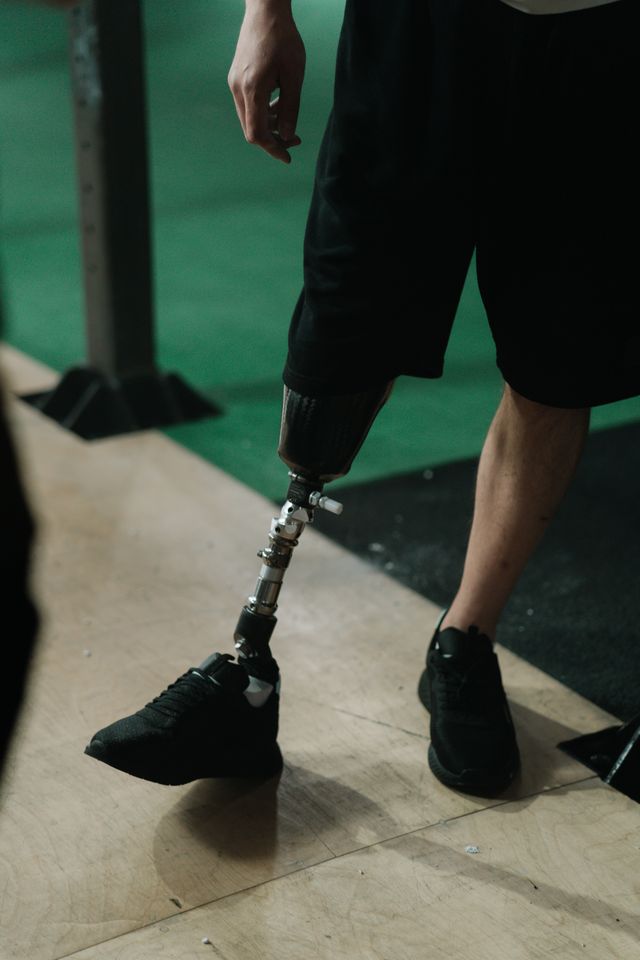
The field of artificial limbs underwent a radical transformation in 2026. These devices have moved far beyond simple mechanical replacements. Today, they are highly intelligent, bio-integrated extensions of the human body.
The shift from “reactive” tools to “proactive” partners is remarkable. Neural interfaces, AI-powered gait adaptation, and osseointegration drive this evolution. Here is the definitive guide to the current state of artificial limbs.
What Are Artificial Limbs?
Artificial limbs are prosthetic devices designed to replace missing or damaged human limbs. In 2026, these systems are no longer passive tools. They are intelligent, adaptive, and deeply integrated with the user’s body and nervous system.
Understanding this technology is essential for patients, caregivers, and medical professionals alike.
1. The Rise of Agentic Prosthetics
In 2026, the industry has entered the era of Agentic Prosthetics. Unlike traditional models, these systems use built-in AI to reason independently about environmental changes. Manual adjustments are no longer necessary.
Furthermore, these prosthetics act as intelligent partners, not just mechanical replacements.
- Intent-Driven Movement: Modern upper-limb prosthetics decode electromyography (EMG) signals from residual muscles. Machine learning allows the limb to predict required grip strength before contact. This works for delicate objects like eggs or water bottles.
- Self-Optimizing Gait: Lower-limb prosthetics now feature “Human-in-the-Loop” optimization. These systems collect walking pattern data continuously. They automatically adjust knee or ankle stiffness and torque to match natural rhythm.
2. Osseointegration: Removing the Socket
One of the most life-changing advancements in artificial limbs is Osseointegration (OI). This surgical process has now been widely adopted. It involves inserting a titanium implant directly into the bone.
As a result, traditional sockets are no longer necessary.
- Direct Skeletal Attachment: OI provides a stable, direct connection to the skeletal system. This eliminates skin irritation, pressure sores, and the common “slippage” of traditional sockets.
- Enhanced Proprioception: Because the limb attaches directly to bone, users experience greater embodiment. Vibrations from the ground travel through bone. This allows users to “feel” the walking surface, a phenomenon called Osseo perception.
Managing high-tech sensors in integrated limbs requires new expertise. Explore our Drovenio IT certification guide to see how medical-tech roles are evolving.
3. Neural-Linked Bidirectional Control
The “holy grail” of artificial limbs, bidirectional communication, has arrived in clinical trials. In 2026, neural-linked systems enable two-way communication between the brain and a machine. This breakthrough is fundamentally transforming the user experience.
- Sensory Feedback: Advanced interfaces now send electrical signals back to peripheral nerves. Users can “feel” fabric texture or handshake pressure. This fundamentally restores the sense of touch.
- Osseointegrated Neural Interfaces (ONI): New surgical techniques house electronics within the medullary canal of long bones. This protects delicate neural interfaces from external damage and interference. The result is more reliable, wireless control.
4. Smart Materials and 3D Customization
The physical makeup of artificial limbs has evolved significantly. Today, the focus is on weight reduction and energy return. Materials science is playing a critical role in this transformation.
- Nanocomposite Materials: UHMWPE (ultra-high-molecular-weight polyethylene) reinforced with nano-zeolite creates superior shock-absorbing joints. These are lighter and more durable than previous carbon-fiber models.
- 3D-Printed Sockets: For users still using sockets, 3D printing allows rapid, millimeter-perfect customization. These “Smart Sockets” include integrated sensors. They monitor pressure and temperature to prevent tissue damage.
As devices become increasingly digital, they require constant software updates. Stay ahead with our droven io cybersecurity updates.
5. Accessibility and the Low-Cost Frontier
While high-end bionic limbs dominate headlines, 2026 has seen a major push for accessibility. Economical artificial limbs are now supporting users in low-income economies. This democratization of technology is a critical development.
- Hybrid Material Design: Researchers use computational modeling to combine low-cost metals like Aluminum 6061 with advanced polymers. This provides rigidity for dynamic loads while keeping production costs low.
- Tele-Rehabilitation: AI-powered mobile apps now guide users through the difficult adaptation period. They offer remote gait analysis and training. Frequent visits to specialized clinics are no longer necessary.
Final Thoughts
The future of artificial limbs is no longer purely mechanical. It is now a seamless blend of biology and silicon. By integrating AI at the edge and surgically anchoring devices to the skeletal system, we have reached a turning point.
A prosthetic is no longer just a tool. It has become a part of the person.
Want to see how AI is powering other industries? Check out our latest report on Droven.io AI automation tools. Or keep up with medical-tech breakthroughs in our Drovenio latest technology news.







EAP Explained: How Extensible Authentication Protocol Works
Modern network infrastructure requires robust access control long before an endpoint receives...
Beatriz2 Mins read
Top 4 Mobile Security Threats Facing Enterprises
Mobile devices now serve as primary productivity tools across the enterprise landscape....
Beatriz2 Mins read

COPE Explained: Corporate-Owned, Personally Enabled
Managing mobile endpoints requires balancing enterprise security with user convenience. To achieve...
Beatriz2 Mins read

BYOD Policy: Protect Company Data and Employee Privacy
The traditional boundaries of corporate IT have completely vanished. Employees expect the...
Beatriz2 Mins read





Leave a comment