

Tesla Flying Car: Is This the Future of Transport?
 BeatrizOctober 16, 20262 Mins read65

For over a century, science fiction promised us one major invention: cars that fly. People dreamed of beating morning traffic by lifting off the ground and soaring straight through the clouds. For a long time, experts dismissed the idea as an impossible fantasy.
However, technology has finally caught up with our imagination. Tesla recently shocked the world by revealing a vehicle that blurs the line between a sports car and a rocket ship.
With major automotive and aerospace companies pushing new boundaries, many are asking: Are flying cars truly the future of transportation, or is this just an expensive toy for the rich?
How Tesla Brought the Flying Car to Life
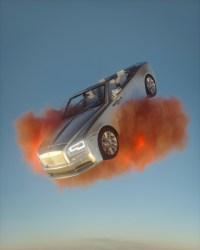
During a live demonstration at a SpaceX testing facility in Texas, Elon Musk unveiled the long-awaited Tesla Roadster 2. Instead of just rolling out a normal electric car, Musk showed off a prototype equipped with SpaceX rocket thrusters capable of lifting the vehicle off the ground.
In promotional videos, the sports car drives up a ramp, uses suction to grip upside down, and then fires its thrusters to leap into the air, flip, and land safely. Musk proudly declared that flying cars are finally real, noting that the vehicle features altitude controls and rear rocket thrusters that let it perform mid-air rolls and extreme maneuvers.
Of course, driving or flying this machine on public roads is currently illegal. The prototype is designed purely for performance and extreme excitement rather than daily commuting. Production is scheduled to begin around 2028, with high-end versions requiring massive deposits.
While everyday drivers will not be soaring over highway traffic anytime soon, this unveiling proves that flying cars are moving from movie screens into the real world.
The Big Challenges Facing Flying Cars
Even though technology allows a sports car to use rocket thrusters, building a practical transport network for the skies creates massive hurdles.
- Safety and Regulation: Air traffic control is complex enough for commercial airplanes. Managing thousands of private vehicles flying at high speeds without crashing into buildings or each other requires entirely new legal systems.
- Energy Consumption: Lifting a heavy vehicle off the ground requires an immense amount of battery or rocket fuel. Just as industrial data centers demand massive power grids to run cloud servers, widespread aerial transport would strain energy resources.
- Cost and Accessibility: With high-end reservation prices stretching into hundreds of thousands of dollars, these early models remain out of reach for the average buyer.
Furthermore, as automation transforms how we move, many workers worry about job security. While job automation replaces roles in factories and offices, pioneering engineers and aerospace designers are working overtime to build the future of transit.
Will We All Be Flying Soon?
The arrival of Tesla’s rocket-powered prototype sparks excitement, but widespread adoption is still a long way off. For the near future, ground-based vehicles, and perhaps automated software like AI tools managing traffic routing, will remain the backbone of daily transportation.
Still, the psychological barrier has been broken. Once a major manufacturer proves that flying cars can exist, other engineers will race to make them safer, cheaper, and more practical for everyday use.
The Bottom Line
The dream of soaring above traffic jams is no longer confined to science fiction. While significant safety, legal, and energy hurdles remain, companies like Tesla and SpaceX are pushing the automotive industry into uncharted territory.




The “Mom, I Lost My Phone” Scam: How Thieves Use AI Voice Cloning
Imagine sitting quietly at home when your phone rings. You pick it...
Beatriz3 Mins read

Free AI Alternatives to Microsoft Word, Excel & PowerPoint
Do you hate paying every year to use Microsoft Office? For many...
Beatriz6 Mins read
CPU vs. GPU: Key Differences Explained
Every computer, phone, and tablet relies on two main computer chips to...
Beatriz2 Mins read

French Supermarket Refrigerators Hit by IoT Cyberattack, Triggering Food Waste
Imagine walking into your local supermarket or managing your smart home. You...
Beatriz3 Mins read




Leave a comment