

How Does Google Maps Know Where You Are?
 BeatrizOctober 12, 20262 Mins read57
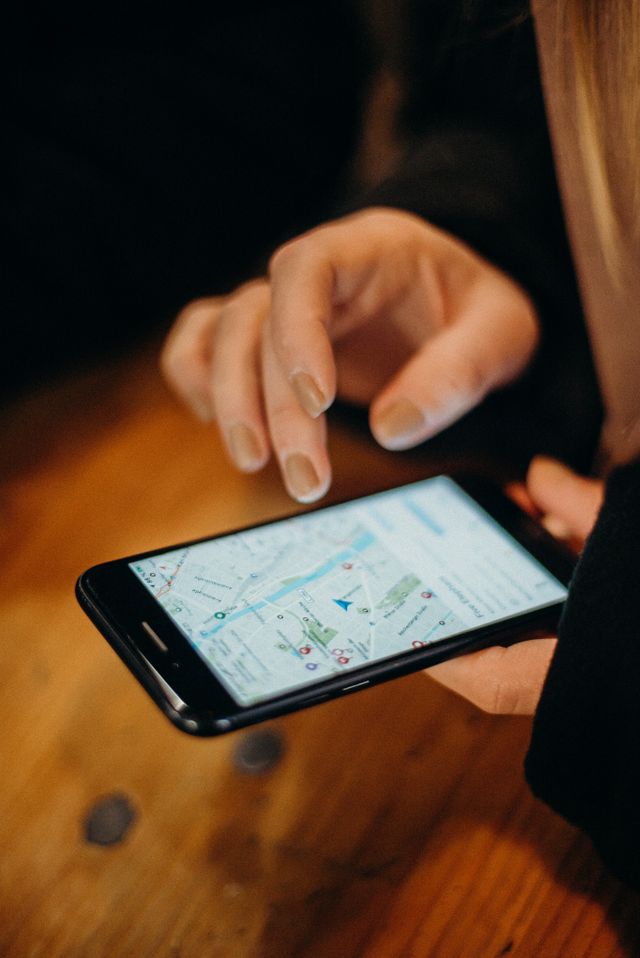
Open Google Maps, tap the blue dot, and within seconds, the map centers precisely on your exact location. Whether you are walking down a bustling downtown sidewalk or driving on a rural highway, the application pinpoints where you are with astonishing accuracy.
It feels like magic, but it is actually a complex orchestration of satellite technology, wireless signals, and advanced software. So, how does Google Maps actually work, and how does it always know where you are?
The Technology Behind Your Location
Many people assume Google Maps relies entirely on GPS satellites orbiting the Earth. While GPS is a major component, your phone actually uses a combination of several technologies to determine your position instantly:
- GPS (Global Positioning System): Your smartphone contains a built-in GPS receiver that listens for signals broadcast by satellites orbiting more than 12,000 miles above Earth. By measuring the time it takes for those signals to reach your phone, the device calculates your exact latitude, longitude, and altitude.
- Wi-Fi Positioning: When you are indoors or navigating between tall skyscrapers where satellite signals cannot reach, your phone scans nearby Wi-Fi routers. Google maintains a massive database mapping the unique physical locations of routers worldwide. By matching nearby Wi-Fi network names to this database, Maps can pinpoint your indoor location within meters.
- Cell Tower Triangulation: If GPS and Wi-Fi are unavailable, your device communicates with nearby mobile network towers. By measuring the signal strength and response time from multiple towers, the system triangulates your general position.
This multi-signal approach ensures that whether you are deep inside a shopping mall or driving through a dense city, your device always knows where you are.
Why Precise Tracking Raises Privacy Questions
While seamless navigation is incredibly convenient, constant location tracking carries hidden costs. Just as people grow uneasy when hidden TV spy software records living room habits or when an aggressive targeted advertisement follows their clicks across the web, sharing real-time location data gives tech platforms deep insight into your daily habits.
Furthermore, keeping your location accurate requires hardware that runs continuously, mirroring the background data collection seen when portable trackers or wearable AI glasses log your daily routines.
How Google Maps Calculates Traffic and Routes
Knowing where you are is only half the battle. The other half is figuring out how to get you to your destination efficiently. Google Maps processes anonymized speed and location data from millions of active users simultaneously.
If hundreds of drivers suddenly slow down on a specific highway, the system registers the slowdown in real time, recalculates alternative routes, and updates your estimated time of arrival (ETA). This dynamic traffic mapping relies on massive cloud infrastructure and computing power, similar to the industrial capacity required to run regional data centers behind the scenes.
The Bottom Line
Google Maps is a masterpiece of modern engineering, combining satellite navigation, Wi-Fi mapping, and crowdsourced traffic data to guide us effortlessly through the world. While its accuracy is impressive, staying mindful of your device’s location permissions ensures you can enjoy smooth navigation while keeping your personal privacy intact.







The “Mom, I Lost My Phone” Scam: How Thieves Use AI Voice Cloning
Imagine sitting quietly at home when your phone rings. You pick it...
Beatriz3 Mins read

Tesla Flying Car: Is This the Future of Transport?
For over a century, science fiction promised us one major invention: cars...
Beatriz2 Mins read
Digital Forensics for Beginners: Complete Guide
Computers, smartphones, cloud services, and networks contain valuable information about what happened...
 Zahra_Alialiali6 Mins read

Free AI Alternatives to Microsoft Word, Excel & PowerPoint
Do you hate paying every year to use Microsoft Office? For many...
Beatriz6 Mins read





Leave a comment