

Vulnerability Management Lifecycle: Complete Guide
 Zahra_AlialialiOctober 27, 20265 Mins read17

Every organization has security weaknesses. Some may come from outdated software, misconfigured systems, vulnerable applications, or unnecessary services.
Finding these weaknesses is only the beginning. Security teams also need to determine which vulnerabilities create the greatest risk, fix them, and confirm that the fixes work.
This is where the vulnerability management lifecycle becomes important.
The vulnerability management lifecycle is a continuous process for discovering, assessing, prioritizing, remediating, and monitoring security vulnerabilities.
It works alongside technologies such as endpoint detection and response tools because endpoint visibility can help security teams identify vulnerable devices and investigate related risks.
This guide explains each stage of the lifecycle, how organizations prioritize vulnerabilities, common challenges, and best practices.
What Is the Vulnerability Management Lifecycle?
The vulnerability management lifecycle is a structured process used to identify and reduce security weaknesses across an organization’s technology environment.
The process generally includes:
- Asset discovery
- Vulnerability identification
- Risk assessment
- Prioritization
- Remediation
- Verification and continuous monitoring
These stages are repeated regularly because new vulnerabilities can appear whenever organizations deploy new software, change configurations, or discover previously unknown security weaknesses.
Why Is the Vulnerability Management Lifecycle Important?
A vulnerability scanner can identify thousands of potential weaknesses. However, not every vulnerability represents the same level of risk.
A critical vulnerability on an internet-facing server may require immediate attention. A low-risk issue on an isolated test system may not.
A structured lifecycle helps security teams:
- Find vulnerabilities earlier
- Understand business risk
- Prioritize remediation
- Reduce attack opportunities
- Verify security improvements
- Maintain continuous visibility
The goal is not simply to fix the largest number of vulnerabilities. It is to reduce the organization’s most important risks.
The 6 Stages of the Vulnerability Management Lifecycle
1. Asset Discovery
Before finding vulnerabilities, organizations need to know what they own.
Assets may include:
- Laptops
- Servers
- Network devices
- Applications
- Databases
- Cloud resources
- Containers
- Internet-facing systems
An incomplete asset inventory can create major security gaps.
For example, a forgotten internet-facing server may contain an exploitable vulnerability that security teams do not know exists.
Asset discovery should therefore be continuous rather than a one-time exercise.
2. Vulnerability Identification
Once assets are identified, security teams can search for vulnerabilities.
Common methods include:
- Vulnerability scanning
- Configuration assessments
- Penetration testing
- Security testing
- Software inventory analysis
- Threat intelligence
Vulnerability scanners can compare software and system configurations against known security weaknesses.
Security teams may also use vulnerability databases containing information about publicly disclosed vulnerabilities.
3. Risk Assessment
Finding a vulnerability does not automatically tell you how dangerous it is.
Security teams need to assess its actual risk.
Important factors can include:
- Severity
- Exploitability
- Asset importance
- Internet exposure
- Available exploits
- Existing security controls
- Potential business impact
For example, a vulnerability on a critical production database may deserve more attention than the same vulnerability on a non-critical testing system.
CVE and CVSS
CVE, or Common Vulnerabilities and Exposures, provides identifiers for publicly known vulnerabilities.
CVSS, or Common Vulnerability Scoring System, provides a standardized way to communicate vulnerability severity.
CVSS is useful, but organizations should not rely on the score alone. Business context and real-world threat activity also matter.
4. Vulnerability Prioritization
Once risks are assessed, security teams decide what should be addressed first.
A risk-based approach can consider:
- Criticality of the asset
- Vulnerability severity
- Exploitation activity
- Internet exposure
- Availability of patches
- Business impact
For example, an actively exploited vulnerability affecting an internet-facing application may receive immediate attention.
This approach prevents security teams from spending most of their time fixing low-impact issues while serious risks remain open.
5. Vulnerability Remediation
Remediation involves reducing or eliminating the vulnerability.
The most common solution is patching.
However, remediation can also involve:
- Updating software
- Changing configurations
- Removing vulnerable services
- Replacing unsupported software
- Improving access controls
Sometimes an immediate patch is not possible.
In that situation, organizations may use mitigation.
Mitigation could involve:
- Restricting network access
- Disabling a vulnerable feature
- Adding additional monitoring
- Applying compensating controls
Remediation and mitigation are not always the same. Remediation addresses the underlying weakness, while mitigation reduces the associated risk without necessarily removing the vulnerability.
6. Verification and Continuous Monitoring
After remediation, security teams should verify that the vulnerability has actually been addressed.
This can involve:
- Rescanning the system
- Reviewing configurations
- Testing the fix
- Checking software versions
A vulnerability should not simply be marked as resolved because someone applied a patch.
Verification provides evidence that the risk has actually been reduced.
Continuous monitoring then helps identify new vulnerabilities as they appear.
Vulnerability Scanning
Vulnerability scanning is an important part of the lifecycle.
Scanners can identify issues across:
- Networks
- Operating systems
- Applications
- Cloud environments
- Databases
- Devices
However, scanning results can contain false positives and may not provide complete context.
Security teams should validate important findings before making major remediation decisions.
Vulnerability Management in Cloud Environments
Cloud environments introduce additional challenges.
Organizations may have rapidly changing:
- Virtual machines
- Containers
- Serverless workloads
- Cloud applications
- APIs
- Identity configurations
A traditional periodic scan may not provide enough visibility in a highly dynamic cloud environment.
Cloud vulnerability management should therefore be connected with asset discovery, configuration monitoring, workload security, and continuous risk assessment.
Vulnerability Management Tools
Organizations use different tools throughout the lifecycle.
Common capabilities include:
- Asset discovery
- Vulnerability scanning
- Risk scoring
- Patch management
- Configuration assessment
- Reporting
- Remediation tracking
Security teams may also connect vulnerability management platforms with SIEM, EDR, ticketing, and other security technologies.
This gives analysts more context when deciding which vulnerabilities require immediate action.
Common Vulnerability Management Challenges
Incomplete Asset Inventory
Unknown systems cannot be properly assessed.
Too Many Vulnerabilities
Large environments can generate thousands of findings.
Poor Prioritization
Treating every vulnerability equally can overwhelm security teams.
Patch Management Delays
Business requirements may prevent immediate patching.
False Positives
Scanning tools may sometimes identify issues that do not represent genuine vulnerabilities.
Lack of Verification
Organizations may assume that a vulnerability is fixed without confirming the result.
Vulnerability Management Best Practices
Organizations can improve their lifecycle by:
- Maintain an accurate asset inventory.
- Scan regularly.
- Prioritize vulnerabilities based on risk.
- Monitor active exploitation.
- Consider business impact.
- Establish clear remediation deadlines.
- Use mitigation when immediate patching is impossible.
- Verify remediation.
- Track unresolved vulnerabilities.
- Continuously monitor the environment.
Security teams should also connect vulnerability management with broader continuous threat exposure management to gain a more continuous view of exposure and risk.
Vulnerability Management Checklist
Use this checklist when reviewing your program:
- Are all important assets identified?
- Are internet-facing systems monitored?
- Are vulnerability scans performed regularly?
- Are vulnerabilities risk-ranked?
- Is active exploitation considered?
- Are critical assets prioritized?
- Are remediation deadlines defined?
- Are mitigation options documented?
- Are fixes verified?
- Are unresolved vulnerabilities tracked?
- Is the process continuously reviewed?
How AI Is Changing Vulnerability Management
Artificial intelligence can help security teams analyze large volumes of vulnerability data.
AI may assist with:
- Risk prioritization
- Vulnerability correlation
- Asset classification
- Alert analysis
- Remediation recommendations
AI can help reduce manual work, but organizations should validate important recommendations.
Automated scoring should not replace human understanding of business impact and security risk.
Conclusion
The vulnerability management lifecycle gives organizations a repeatable process for identifying and reducing security weaknesses.
The process begins with asset discovery and continues through vulnerability identification, risk assessment, prioritization, remediation, verification, and ongoing monitoring.
Effective vulnerability management is not about fixing every finding immediately. It is about understanding which weaknesses create the greatest risk and addressing those weaknesses in the right order.
Organizations should also connect vulnerability management with incident response plan procedures. This helps teams respond quickly when a vulnerability is exploited before remediation is complete.
A mature vulnerability management program is continuous. New assets and vulnerabilities appear regularly, so security teams need ongoing visibility, prioritization, remediation, and verification.
FAQs
What is the vulnerability management lifecycle?
The vulnerability management lifecycle is a continuous process for discovering, assessing, prioritizing, remediating, verifying, and monitoring security vulnerabilities.
What are the main stages of vulnerability management?
The main stages are asset discovery, vulnerability identification, risk assessment, prioritization, remediation, and verification with continuous monitoring.
What is the purpose of vulnerability prioritization?
Prioritization helps security teams focus on vulnerabilities that create the greatest risk instead of treating every vulnerability equally.
What is CVE?
CVE stands for Common Vulnerabilities and Exposures. It provides standardized identifiers for publicly disclosed cybersecurity vulnerabilities.
What is CVSS?
CVSS stands for Common Vulnerability Scoring System. It provides a standardized method for describing the severity of vulnerabilities.
What is the difference between remediation and mitigation?
Remediation addresses or removes the underlying vulnerability. Mitigation reduces the risk associated with a vulnerability without necessarily removing the underlying weakness.
How often should vulnerability scans be performed?
The appropriate frequency depends on the organization’s environment and risk profile. Dynamic and high-risk environments generally require more frequent assessment and continuous monitoring.
Why is vulnerability verification important?
Verification confirms that a vulnerability has actually been addressed. Without verification, organizations may incorrectly assume that a security weakness has been fixed.





Cybersecurity Risk Assessment: Complete Guide
Every organization faces cybersecurity risks. These risks can come from malware, phishing,...
Zahra_Alialiali6 Mins read

Network Detection and Response: Complete Guide
Modern cyberattacks can move through networks quickly. Attackers may use stolen credentials,...
Zahra_Alialiali6 Mins read
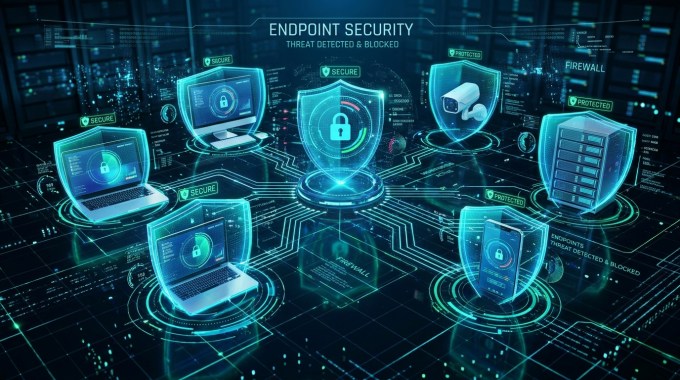
Endpoint Detection and Response Tools: Complete Guide
Computers, laptops, servers, and other endpoints are common targets for cyberattacks. Attackers...
Zahra_Alialiali6 Mins read

Threat Hunting Techniques: Complete Guide
Cybersecurity tools can detect many threats automatically, but they cannot always identify...
Zahra_Alialiali6 Mins read





Leave a comment